In the often tumultuous sea of global fashion, where trends crash and recede like waves, Max Mara stands as a serene and steadfast island of enduring style. For over seventy years, the Italian brand has cultivated a reputation built not on fleeting fads or celebrity endorsements, but on the unwavering principles of quality, craftsmanship, and a quiet, almost understated, luxury. It’s a brand that whispers confidence rather than shouts, dressing women who appreciate substance and sophistication over transient spectacle. To understand Max Mara is to understand a particular philosophy of dressing – one centered on empowering the wearer through impeccable fit, luxurious materials, and timeless design.
The story of Max Mara begins in 1951 in Reggio Emilia, a city in the Emilia-Romagna region of Italy known for its textile industry. The founder, Achille Maramotti, a man with a law degree but a passion for fashion passed down from his great-grandmother (who owned a tailor’s shop) and his mother (who taught dressmaking), recognized a significant opportunity. At the time, high fashion was largely the preserve of exclusive Parisian or Roman haute couture houses, accessible only to a privileged few who could afford bespoke creations. Maramotti’s vision was revolutionary for its time: to produce high-quality, stylish, ready-to-wear clothing using industrial processes combined with traditional Italian tailoring know-how. He wanted to make well-made, fashionable garments available to a broader market of stylish women. The name “Max Mara” itself is said to be a combination of “Mara” from his surname Maramotti, and “Max,” referring to Count Max, a local character known for his impeccable style but who was perhaps a bit flamboyant – a contrast to the understated elegance Maramotti envisioned for his brand.
Maramotti’s initial focus was on coats and suits, garments that require precise tailoring and quality fabrics to look truly exceptional. This early specialization in outerwear would prove foundational to the brand’s identity. He understood that a great coat was a powerful statement piece, an investment that could elevate a woman’s entire wardrobe and last for years. This focus on longevity and investment pieces, rather than disposable fashion, was baked into the brand’s DNA from the very beginning.
The core design philosophy at Max Mara is one of considered restraint and effortless elegance. Unlike many luxury brands that rely on prominent logos or distinctive prints, Max Mara’s identity is subtly woven into the fabric and the cut of its garments. The aesthetic is clean, minimalist, and focused on form and proportion. Silhouettes are often classic and timeless, designed to flatter the female form without being overly revealing or restrictive. The aim is to create clothing that makes the woman feel confident and comfortable, allowing her personality to shine through.
Color plays a crucial, albeit subtle, role in the Max Mara palette. While seasonal collections may introduce certain accent colors, the brand is synonymous with a sophisticated range of neutrals: camel, beige, white, cream, black, grey, and navy. These colors are chosen for their versatility and their ability to convey sophistication. They are easy to mix and match, creating a harmonious and adaptable wardrobe. This neutral foundation ensures that Max Mara pieces remain stylish and wearable season after season, transcending fleeting color trends. The famous “camel color,” in particular, has become almost a brand signature, instantly recognizable and synonymous with luxurious outerwear.
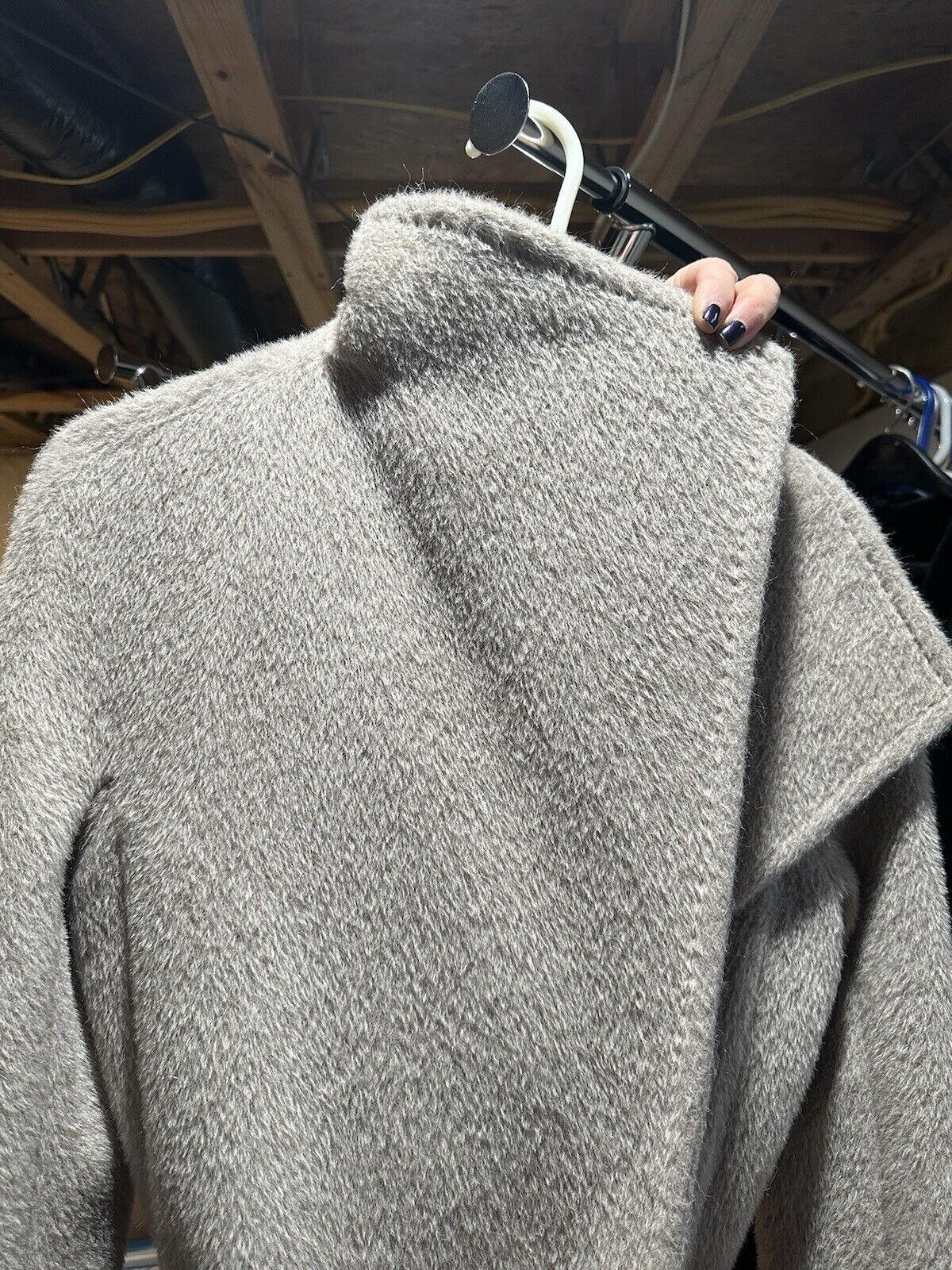
However, what truly sets Max Mara apart is its unwavering commitment to quality and craftsmanship. This is where the “quiet luxury” aspect becomes most apparent. The brand meticulously sources the finest natural fibers from around the world. Cashmere, often sourced from Inner Mongolia, is a cornerstone of their collections, used in everything from their legendary coats to sumptuously soft knitwear. Wool, silk, linen, and high-quality cotton are also integral, chosen for their feel, drape, and durability. The tactile experience of a Max Mara garment is as important as its visual appeal. The softness of a cashmere coat, the crispness of a linen suit, the fluidity of a silk blouse – these material qualities are fundamental to the brand’s luxurious identity.
The construction of a Max Mara garment is a masterclass in traditional tailoring techniques combined with modern precision. While industrial processes allow for consistent quality and scale, the finishing touches often involve handwork and meticulous attention to detail. The lining of a coat is carefully set, the seams are impeccably finished, and the buttons and hardware are chosen for their quality and subtle elegance. A Max Mara coat, for example, can involve dozens of individual pieces and numerous steps in its construction, reflecting a level of craftsmanship that ensures not only a perfect fit but also longevity. This dedication to quality means that Max Mara pieces are not just clothes; they are investment pieces, designed to be worn and cherished for many years, even decades.
While the camel coat, particularly the iconic 101801 model designed by Anne-Marie Beretta in 1981, is arguably the most famous Max Mara creation and a true fashion legend, the brand offers a comprehensive wardrobe that extends far beyond outerwear. The 101801, with its perfect proportions, kimono sleeves, and timeless double-breasted cut in cashmere and wool, became an instant classic and remains a core part of the collection today, a testament to its enduring design genius. Other iconic coats like the wrap-style Ludmilla and Labbro in pure cashmere also embody the brand’s effortless elegance.
Beyond the coats, Max Mara excels in tailoring. Their trousers are renowned for their flattering fit and comfortable feel, often featuring clean lines and versatile cuts that work for both professional and casual settings. Blazers and jackets are sharply tailored, providing structure and sophistication without being stiff. These pieces are designed to be mixed and matched, forming the basis of a versatile and polished wardrobe.
Knitwear is another area where Max Mara’s commitment to quality materials shines. Fine gauge cashmere sweaters, chunky wool cardigans, and elegant silk-blend tops are staples of their collections, offering both warmth and luxurious texture. The focus is on classic shapes and neutral colors, ensuring that these pieces integrate seamlessly into the rest of the Max Mara wardrobe.
Dresses and skirts in the Max Mara collections tend to follow the same principles of clean lines and elegant simplicity. Sheath dresses in luxurious wool crepe, fluid silk dresses that drape beautifully, and tailored skirts in versatile lengths provide options for various occasions, always prioritizing fit and sophisticated style over elaborate ornamentation.
Accessories, including leather handbags, shoes, and scarves, complement the clothing line, maintaining the same standard of understated luxury and quality. Max Mara bags are often structured and timeless in design, made from high-quality leathers in classic colors. Scarves feature subtle prints or luxurious textures, adding a finishing touch of sophistication.
The “Max Mara woman” is a concept central to the brand’s identity. She is not defined by age or nationality, but by her attitude and values. She is typically portrayed as intelligent, confident, and successful, with a sophisticated understanding of style. She values quality, practicality, and comfort. She is not interested in being a slave to trends but seeks clothing that empowers her and makes her feel good. She has a life that demands versatility from her wardrobe, seamlessly transitioning from professional environments to social engagements. The Max Mara woman embodies a quiet strength and an understated elegance; her clothing is an extension of her personality, not a mask. The brand designs for her specific needs, creating garments that are functional, comfortable, and effortlessly chic.
Over the decades, Max Mara has grown into a significant fashion group, the Max Mara Fashion Group, which encompasses several diffusion lines, each catering to a slightly different market segment while maintaining the core principles of quality and design. Sportmax, launched in 1969, was an early pioneer in offering more trend-driven fashion while still maintaining a high standard of quality. Weekend Max Mara, launched in 1984, offers a more relaxed, lifestyle-oriented collection, perfect for leisure time but still with that signature Italian polish. Other lines like Max&Co., Marella, iBlues, Pennyblack, and Persona cater to various price points and stylistic preferences, creating a comprehensive offering under the Max Mara umbrella while the main Max Mara line remains the pinnacle of their understated luxury aesthetic. This expansion has allowed the group to reach a wider audience while preserving the distinct identity of the core Max Mara brand.
In the contemporary fashion landscape, Max Mara’s approach feels more relevant than ever. In an era of fast fashion’s environmental and social costs, and of overt branding and fleeting micro-trends, Max Mara’s emphasis on quality, durability, and timelessness resonates with consumers who are increasingly seeking conscious consumption and investment pieces. Buying a Max Mara coat or suit is an antithesis to disposable clothing; it’s an act of investing in something designed to last and be cherished. While not always the loudest voice in fashion, Max Mara’s consistent quality and clear identity have earned it a fiercely loyal following and a secure place in the global luxury market. Their retail stores, designed to be spacious and serene, offer an experience that reflects the brand’s calm and sophisticated aesthetic.
Furthermore, Max Mara’s marketing campaigns, while elegant and aspirational, tend to focus on the garments themselves and the feeling they evoke, rather than relying solely on fleeting celebrity hype (although they do work with notable models and photographers). This reinforces the idea that the clothes are the stars, designed for real women with sophisticated lives.
Looking ahead, Max Mara continues to subtly evolve, incorporating new fabric technologies and slightly adjusting silhouettes to ensure relevance, but always within the boundaries of its established design language. The commitment to Italian craftsmanship remains paramount, a link to the brand’s heritage and a guarantee of quality in an increasingly globalized production landscape.
In conclusion, the enduring legacy of Max Mara is a powerful testament to the success of focusing on timeless design, exceptional quality, and a philosophy of quiet luxury. From Achille Maramotti’s pioneering vision of high-quality ready-to-wear to the iconic camel coats and perfectly tailored separates that define the brand today, Max Mara has consistently delivered clothing that empowers women through its sophistication and practicality. It’s a brand that doesn’t need to shout to be heard, its presence felt through the luxurious feel of its fabrics, the impeccable fit of its garments, and the quiet confidence it bestows upon the wearer. In a world of rapidly changing trends, Max Mara offers a constant – a promise of enduring style and quality that makes its pieces not just purchases, but lifelong investments. It is, and remains, a true powerhouse of understated elegance in the global fashion industry.